Pursue is the correct spelling. Persue is an old, obsolete form that dictionaries no longer accept. Use pursue when you mean to chase something or work toward a goal. This guide explains the meaning, usage and easy memory tricks.
Persue or Pursue: Which Spelling Is Correct?
Pursue Is the Right Spelling: Write pursue, with a u in both syllables: pur-sue. If you type persue, spell check will flag it.
Use this simple test. If you can swap in “chase” or “go after,” the word is pursue.
What Does Pursue Mean?
pursue-meaning
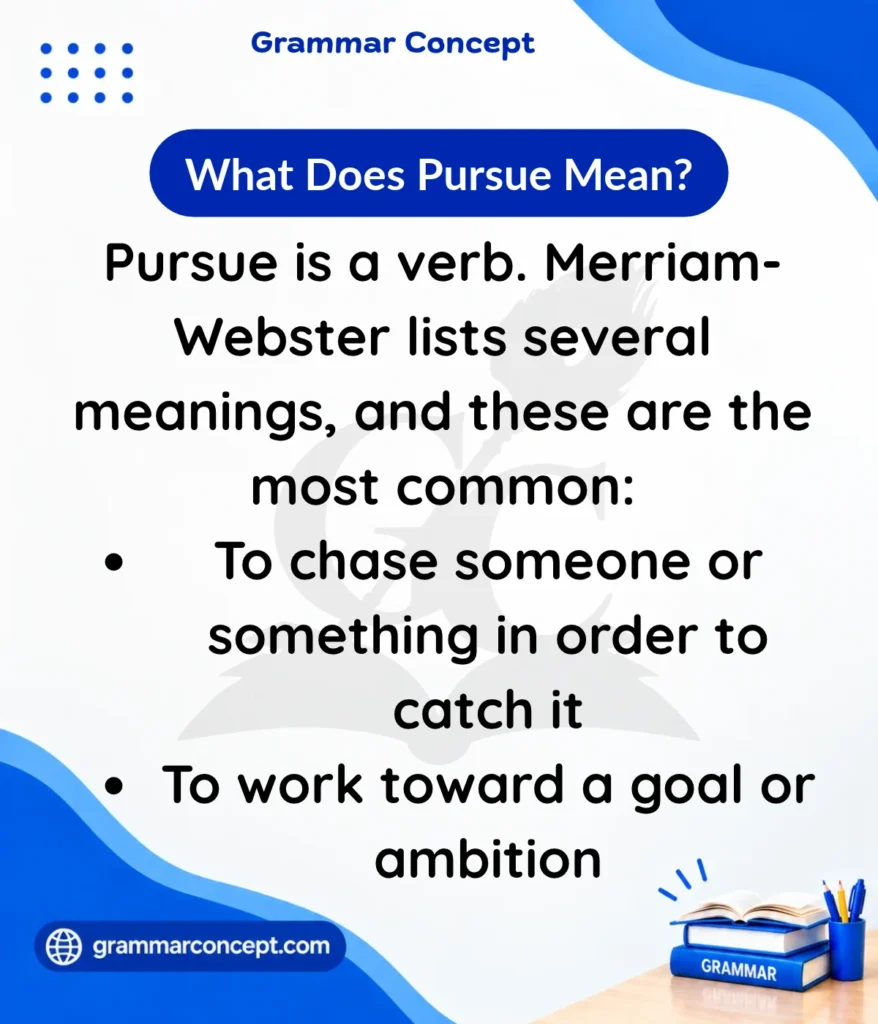
Pursue is a verb. Merriam-Webster lists several meanings, and these are the most common:
To chase someone or something in order to catch it
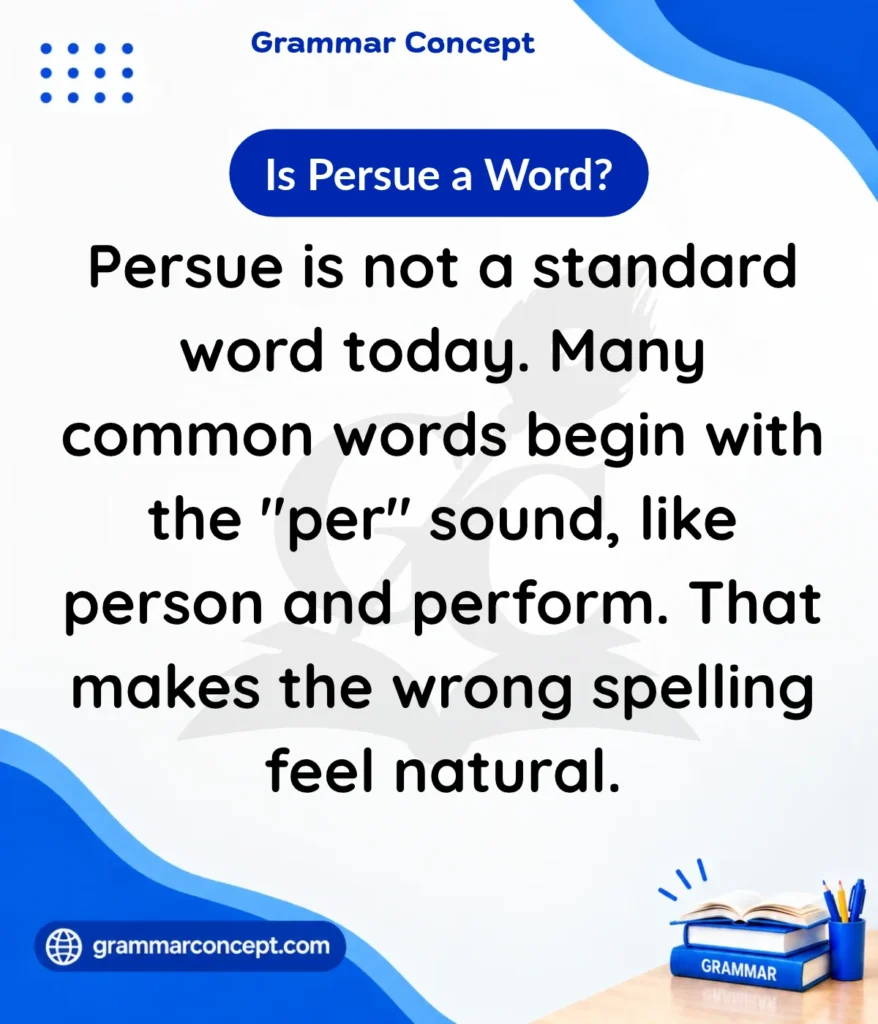
Persue is not a standard word today. Many common words begin with the “per” sound, like person and perform. That makes the wrong spelling feel natural.
The sound is another trap. The first syllable sounds like “per,” so the ear says “e” while the correct spelling uses “u.”
Persue as an Obsolete Spelling
ProWritingAid calls persue an antiquated spelling of pursue. Modern dictionaries list only pursue.
So persue is a misspelling in all current writing. Resumes, emails and school papers should always use pursue.
Pursue ends in “sue,” like the verb sue. Both come from the same Latin family.
The noun pursuit has a u in the same spot. Think “pur-suit.”
Say it slowly as “pur-sue” when you type it.
How to Use Pursue Correctly
Pursue Forms: Pursued, Pursuing, Pursuit
Form
Example
Pursue
We pursue better habits.
Pursues
She pursues a music career.
Pursued
The dog pursued the ball.
Pursuing
He is pursuing a new job.
Pursuit
The pursuit of happiness matters.
Common Phrases and Synonyms of Pursue
Common phrases include pursue a goal, pursue a career, pursue a degree and pursue legal action.
Useful synonyms depend on the meaning:
Chase, follow and track for physical pursuit
Seek, strive for and go after for goals
Practice and engage in for hobbies
Conclusion
Always write pursue, never persue. Remember that it ends in “sue” and links to the noun pursuit. Use it for chasing, goals, hobbies and follow-up actions.
Hi, I’m Dylan Ross, the author of GrammarConcept.com. I make English grammar, grammar rules, and sentence structure easier to understand through simple explanations, practical examples, and helpful guides. My goal is to help students, writers, and English learners improve their grammar and communicate with confidence.