Hassle vs hastle has a simple answer: hassle is the correct spelling. Hastle is a common misspelling and is not in standard dictionaries. A hassle is an annoyance, an inconvenience, or extra effort.
This guide covers the difference, usage, and examples so you can spell it right every time.
What Does Hassle Mean?
hassle-meaning
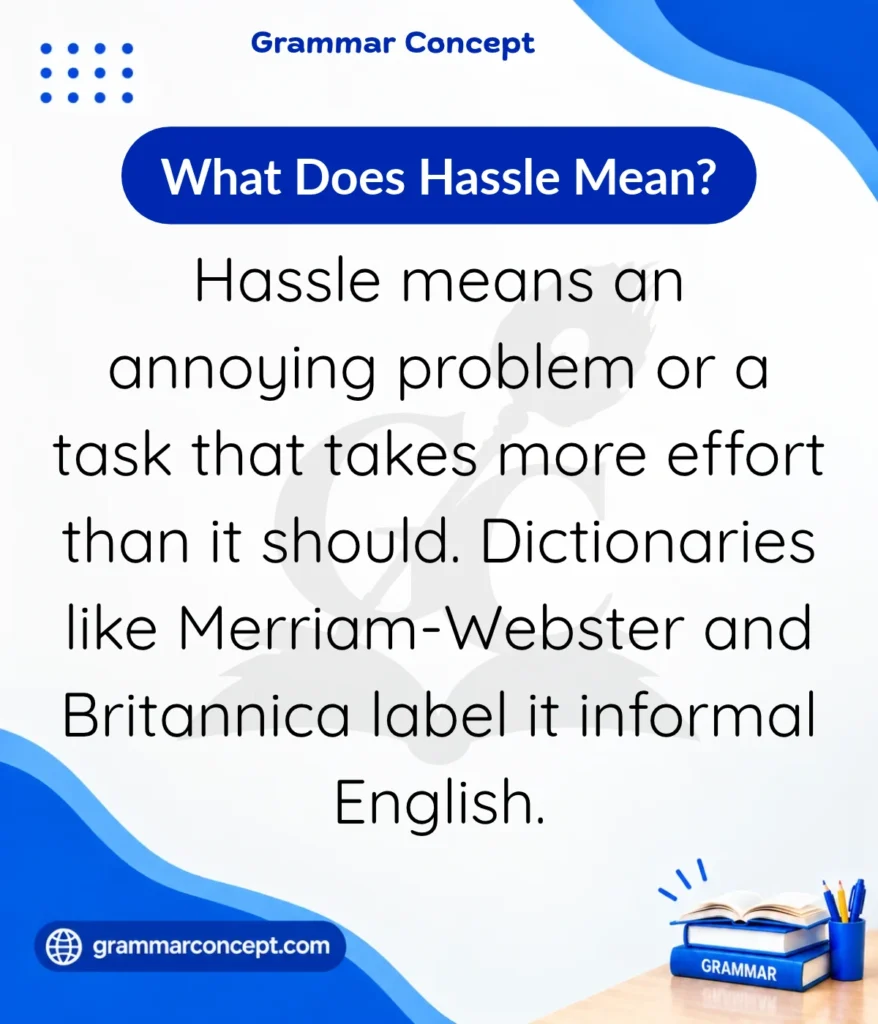
Hassle means an annoying problem or a task that takes more effort than it should. Dictionaries like Merriam-Webster and Britannica label it informal English.
It usually describes small frustrations, such as long lines, paperwork, or traffic. Close synonyms include trouble, inconvenience, nuisance, and bother.
Hassle as a Noun
As a noun, hassle names the problem itself. It often follows “a” or “the.”
Finding parking downtown is a hassle.
Online shopping saves us the hassle of visiting stores.
Renewing a passport can be a real hassle.
Hassle as a Verb
As a verb, hassle means to bother or pressure someone again and again. Its forms are hassles, hassled, and hassling.
Words like castle, whistle, and bustle use a -stle ending.
Hustle and haste look and sound close to hassle.
Fast typing and missed autocorrect can swap one letter.
The word is also fairly young. It entered common use in the mid-1900s, and its exact origin is still uncertain. That may explain why its spelling feels less settled than older words.
Easy Tricks to Remember the Spelling
Try these quick memory aids.
Stress and hassle both have a double s.
Break it up: Ha + ss + le.
Think of hassle-free, a phrase used on many store signs.
A short rule also works: double S, no T.
Hassle Examples in Sentences
Real sentences make the hassle usage clear. Use hassle when you mean trouble or extra effort.
Correct Sentences With Hassle
Booking tickets online was no hassle.
Moving to a new apartment can be a hassle.
The new app removes the hassle of paperwork.
Don’t hassle your brother while he studies.
We love the hassle-free return policy.
Use a hyphen in hassle-free when it comes before a noun, as in “a hassle-free checkout.”
Wrong vs Right
❌ That was a real hastle. ✅ That was a real hassle.
❌ Don’t hastle me. ✅ Don’t hassle me.
❌ Too much hastle for one day. ✅ Too much hassle for one day.
Conclusion
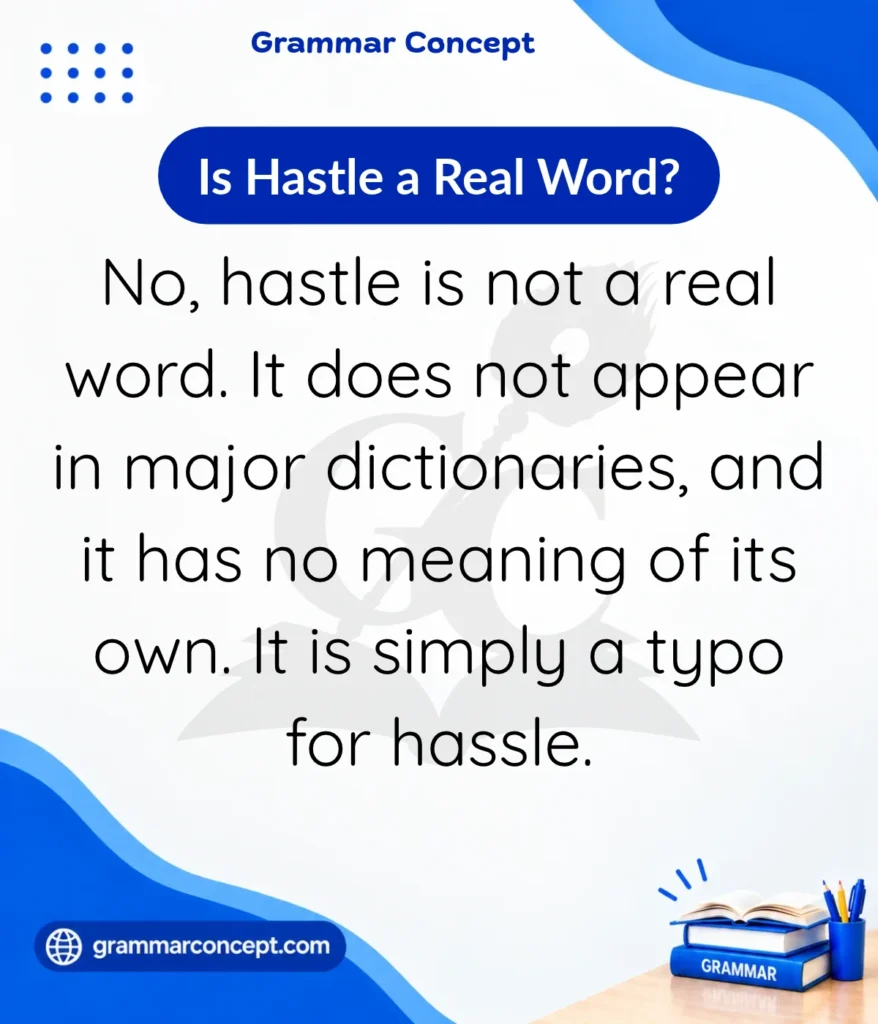
In the hassle vs hastle question, hassle always wins. Hastle is only a typo. Keep the rule in mind, double S, no T, and your writing will stay clean and clear.
Hi, I’m Dylan Ross, the author of GrammarConcept.com. I make English grammar, grammar rules, and sentence structure easier to understand through simple explanations, practical examples, and helpful guides. My goal is to help students, writers, and English learners improve their grammar and communicate with confidence.