In process vs in progress is a common mix-up, and the short answer is simple. Both mean something has started and is not finished. In progress is the more common choice for projects, events, and tasks. In process often fits paperwork, orders, and workflows that move through set steps.
What Does “In Process” Mean?
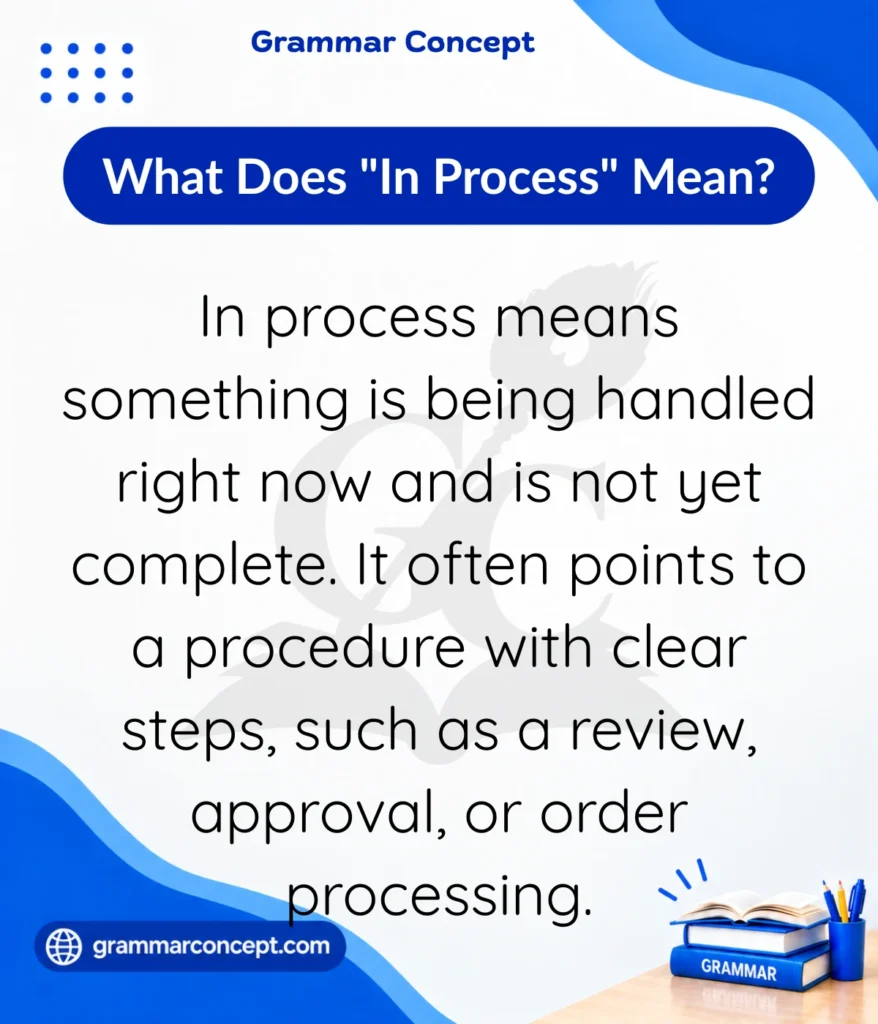
In process means something is being handled right now and is not yet complete. It often points to a procedure with clear steps, such as a review, approval, or order processing.
You will see it in banking, shipping, and customer service. It also shows up in accounting as work in process, which means partly finished goods.
In Process Examples
These sentences show the in process meaning in daily use:
- Your refund is in process.
- The loan application is in process.
- Your order is in process and will ship soon.
- The claim is in process at the insurance office.
Each one describes a request moving through a system.
More Post: Me Too or Me As Well vs I As Well
What Does “In Progress” Mean?
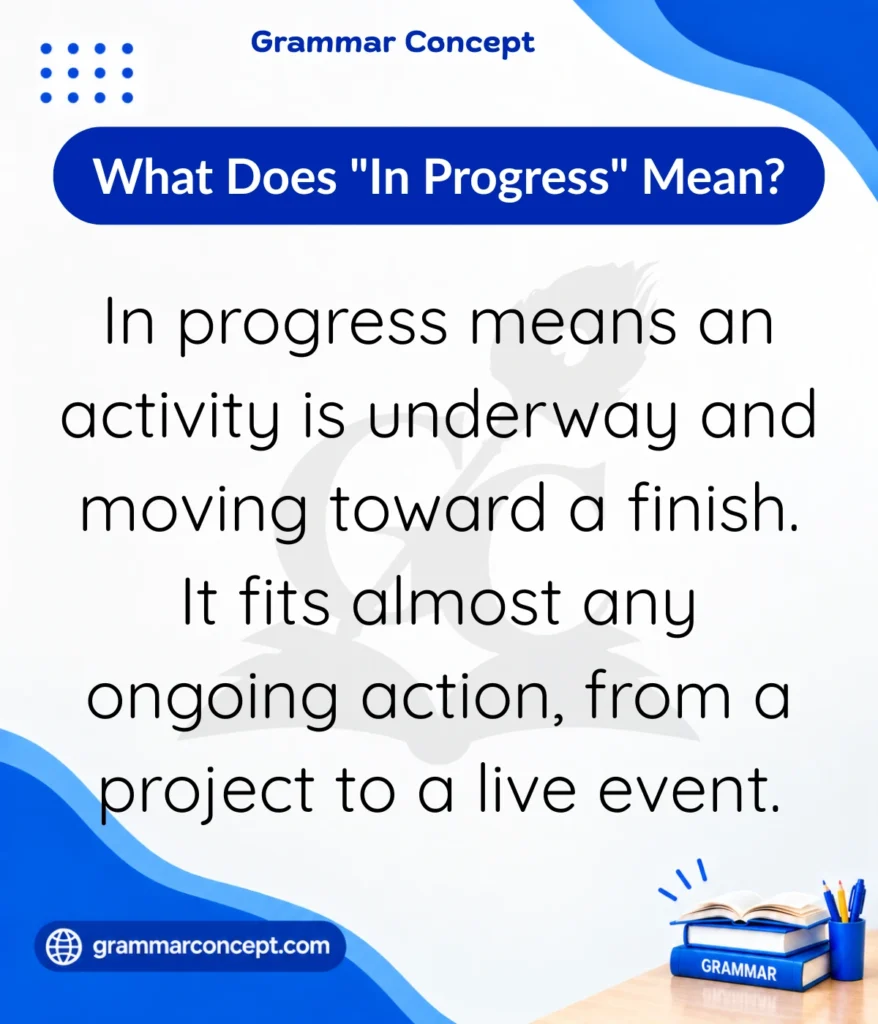
In progress means an activity is underway and moving toward a finish. It fits almost any ongoing action, from a project to a live event.
It is also the phrase behind work in progress, a noun for anything not yet finished. Merriam-Webster treats the two phrases as synonyms, and a Symitar editor’s usage check found in progress about seven times as common as in process.
In Progress Examples
Here is how in progress works in real sentences:
- The roadwork is in progress downtown.
- The meeting is in progress, so please wait.
- The software update is in progress.
- Her novel is a work in progress.
Each one stresses active movement.
More Post: Next Friday or This Friday
In Process vs In Progress Differences Chart
| Feature | In Process | In Progress |
|---|---|---|
| Basic meaning | Being handled step by step | Underway and moving forward |
| Common tone | Procedural, administrative | General, action-focused |
| Typical use | Orders, claims, applications | Projects, events, construction |
| Frequency | Less common | More common |
| Noun form | Work in process | Work in progress |
Some businesses set their own rules for these terms. Accounting teams, for example, often use work in process for factory inventory.
When to Use In Process vs In Progress
Pick in process when a request moves through a system. Pick in progress when people are actively doing something.
If you feel unsure, choose in progress. It is the safer, more familiar option.
Common Mistakes with In Process vs In Progress
The biggest slip is mixing up in process with in the process of. They are not the same phrase. “She is in the process of moving” is correct, and “She is in process of moving” is not.
Another mistake is using in process for a general activity. “The concert is in process” sounds odd, while “The concert is in progress” sounds natural.
Quick Fixes for Clearer Writing
Use these small habits to keep your in progress vs in process choices clean:
- Add “the” and “of” when you mean in the process of.
- Use a hyphen only before a noun: “an in-progress review.”
- Skip both phrases and give a date: “Finished by Friday.”
Clear details beat vague status words every time.
More Post: Annunciate vs Enunciate
FAQ’s In Process vs In Progress
Is in process or in progress correct?
Both are correct. In progress is more common, and in process works well for procedures and paperwork.
Can I use in process and in progress interchangeably?
Most of the time, yes. Dictionaries treat them as near synonyms, but in progress is the safer pick.
What does work in process mean?
Work in process means partly finished goods in production. It includes materials, labor, and factory costs.
Is “in the process of” the same as “in process”?
No. In the process of describes someone doing an action, like “I am in the process of cooking.”
Is “in progress” more common in British English too?
Yes. In progress is the preferred form in both American and British English.

Hi, I’m Dylan Ross, the author of GrammarConcept.com. I make English grammar, grammar rules, and sentence structure easier to understand through simple explanations, practical examples, and helpful guides. My goal is to help students, writers, and English learners improve their grammar and communicate with confidence.